Trapped by a $1,500 ‘Freedom Fee’: The Story of a Ghanaian Domestic Worker Stranded in Iraq
When Patience Asiam, a 27-year-old Ghanaian woman, left home for Iraq in February 2025, she carried with her the hopes shared by many migrant workers — the promise of better income, stability, and a chance to support family back home.
But just one year into what was meant to be a two-year domestic work contract, that promise has turned into a distressing ordeal.
Today, Patience is stranded in Iraq.
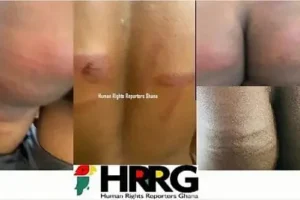
After months of work, she developed a serious eye condition that forced her to stop working — a difficult but necessary decision made on medical grounds. What followed, however, has raised troubling questions about the treatment and protection of migrant domestic workers abroad.
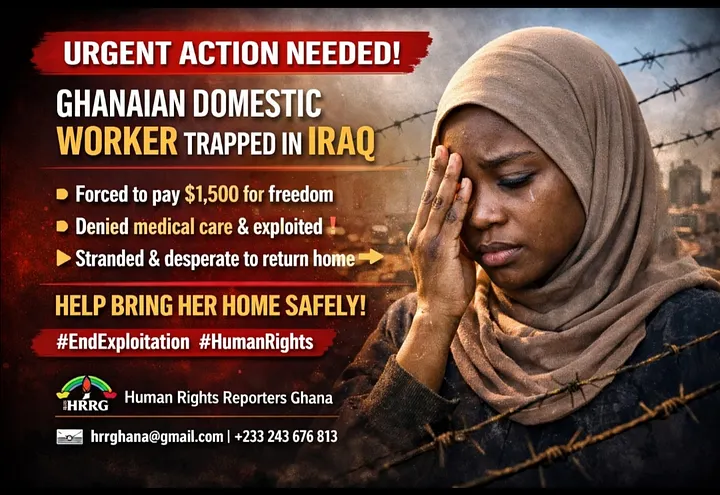
According to information received by Human Rights Reporters Ghana (HRRG), her employer has demanded a payment of $1,500 as a condition for her release and return to Ghana.
In effect, her freedom has been priced.
For Patience, this is not just a financial burden — it is a barrier standing between her and safety, healthcare, and the chance to return home.
Even more concerning is the role of the recruitment agency that facilitated her travel, Sulamania Hasiah Company. Instead of supporting her in a moment of vulnerability, the agency has reportedly failed to intervene and appears to align with the employer’s position.
This leaves Patience in a precarious situation — far from home, in poor health, and without meaningful support.
Cases like hers highlight a broader and deeply rooted issue: the vulnerability of migrant domestic workers, particularly within systems where employer control can significantly limit a worker’s freedom of movement and access to justice.
Human rights advocates have long warned about practices that resemble debt bondage and labour exploitation, where workers are unable to leave their employment without meeting financial conditions imposed by employers.
In response to this situation, Human Rights Reporters Ghana (HRRG) has formally notified the Ministry of Foreign Affairs and Regional Integration and is actively engaging the International Organization for Migration (IOM) to facilitate urgent intervention, protection, and her safe return to Ghana.
But beyond this individual case lies a bigger question:
How many more migrant workers find themselves trapped in silence, unable to return home due to conditions beyond their control?
Patience’s story is not an isolated one. It reflects systemic gaps in recruitment oversight, migrant protection, and enforcement of labour rights across borders.
Her situation calls for urgent action — not only to secure her safe return but also to strengthen safeguards that prevent similar cases in the future.
For now, what she needs most is swift intervention.
A way home.
Access to medical care.
And the restoration of her dignity.
As efforts continue behind the scenes, HRRG is urging government institutions, international organizations, civil society actors, and the public to lend their voices and support.
Because no one’s freedom should come at a price.