Literacy Is a Human Rights Issue — HRRG Boss Urges Stronger Investment in Reading
Executive Director of Human Rights Reporters Ghana (HRRG) and Convener of the Youth Sub-Platform of the Ghana Civil Society Organisations (CSOs) Platform on the Sustainable Development Goals (SDGs), Dr. Joseph Kobla Wemakor, has called for urgent national investment in literacy, warning that Ghana’s reading challenges must be treated as a fundamental human rights and development priority.
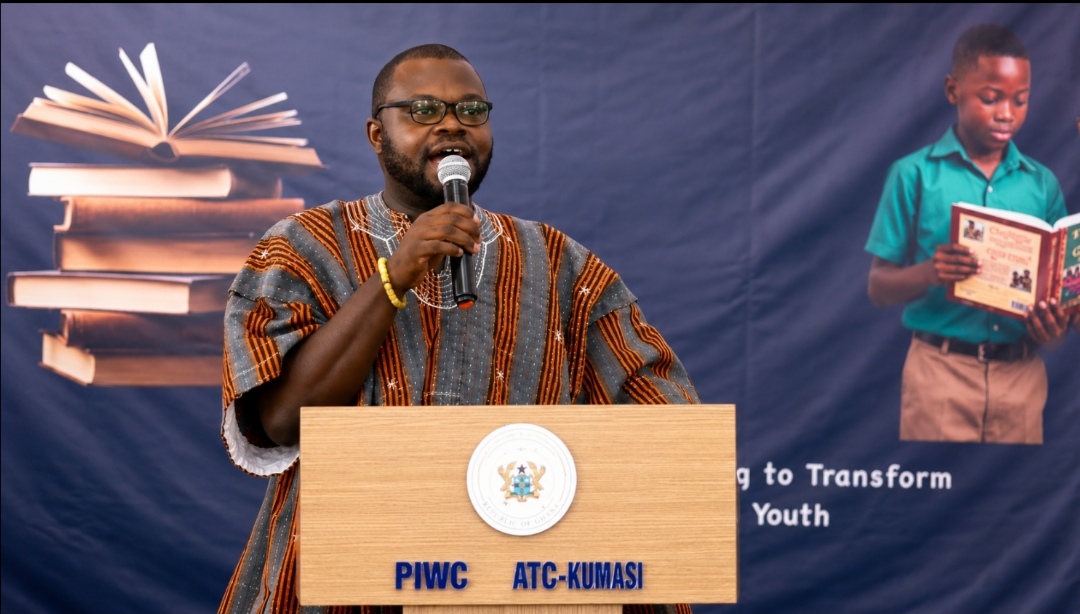
Dr. Wemakor made the call during the maiden Ghana Literacy Fair 2026 held at the Pentecost International Worship Centre (PIWC)-Atomic in Accra, where education stakeholders, civil society actors, and development partners gathered to discuss strategies to improve the country’s reading culture.
The three-day event, which climaxed with a national launch under the theme “Unleashing the Power of Reading to Transform Ghanaian Students and Youth,” attracted more than 3,000 participants, including schoolchildren, educators, policymakers, and development actors. Activities included reading and speech marathons, storytelling sessions, choreography performances, and mentorship engagements aimed at promoting literacy among young people.
Dr. Wemakor who also serves as the Convener of the Youth sub-platform of the Ghana CSOs Platform on SDGs stressed that literacy goes beyond classroom instruction, describing it as a critical tool for empowerment, social inclusion, and national transformation.
He cautioned that Ghana’s declining reading culture poses a serious threat to development and democracy, particularly among young people who form the majority of the population.
“Literacy is not just about the ability to read and write. It is about empowerment, dignity, and the ability of every young person to understand their rights, resist misinformation, and participate meaningfully in society,” Dr. Wemakor stated.
He further emphasized that a literate population is better positioned to contribute to national development and resist manipulation, crime, and exploitation.
Speaking on behalf of the Minister of Education, Haruna Iddrisu, Technical Advisor Prof. George K. T. Oduro described reading as the foundation of all learning and a key determinant of academic success.
He expressed concern over Ghana’s declining literacy levels, noting that only about eight per cent of pupils in Primary Two and Primary Three demonstrate foundational literacy skills, while more than 60 per cent fail to achieve minimum proficiency by the end of primary school.
“The cost of inaction is high,” he warned, adding that government is implementing curriculum reforms, phonics-based instruction, teacher training, and the use of Ghanaian languages as mediums of instruction in early-grade education.
Executive Director of the Sophia Boadi Readathon International Foundation (SBRIF), Ms. Sophia Boadi, described literacy as a national emergency requiring collective action.
She announced the launch of the National Readathon Challenge, which seeks to engage 500,000 students across all 16 regions over the next 12 months, alongside training for 5,000 teachers and the establishment of 100 libraries.
Ms. Boadi called for stronger policy backing for literacy initiatives, urging government to formally integrate the Ghana Literacy Fair and related programmes into the national education calendar.
Secretary-General of the Pan-African Writers Association (PAWA), Dr. Wale Okediran, encouraged students to cultivate both reading and writing habits while embracing indigenous languages as part of preserving African cultural identity.
National Director of the Schools Outreach Ministry of the Church of Pentecost, Pastor Frank Mensah Tandoh, underscored the importance of integrating moral values and mentorship into education to support holistic child development.
The Ghana Literacy Fair 2026 was organised by the Sophia Boadi Readathon International Foundation (SBRIF) in collaboration with the Ministry of Education, Pan-African Writers Association (PAWA), the Schools Outreach Ministry (SOM), Pentecost University, and other partners committed to promoting literacy and youth development.
Participants expressed optimism that the initiative would help strengthen Ghana’s reading culture and inspire long-term commitment to literacy development among children and young people.