OVERVIEW
A Human Rights Reporters Ghana (HRRG) Advocacy Campaign
Advancing Disability Rights, Inclusion, Equality and Dignity in Africa
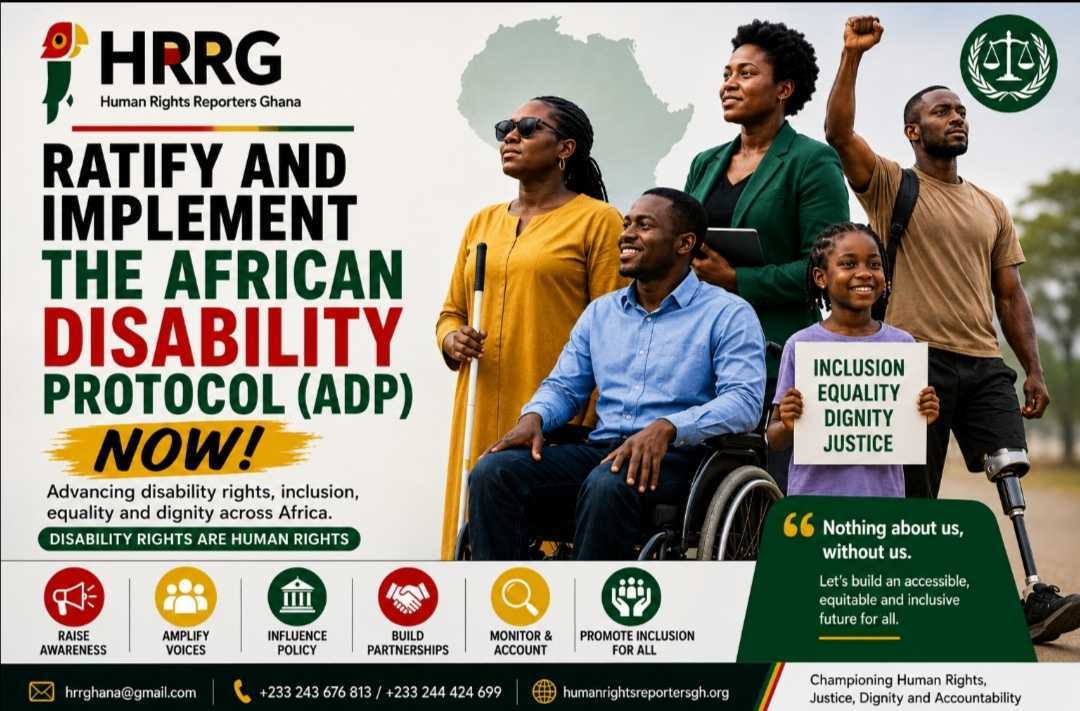
Human Rights Reporters Ghana (HRRG) is implementing a strategic media and advocacy campaign aimed at supporting the ratification, domestication, implementation, and monitoring of the African Disability Protocol (ADP) in Ghana and across Africa.
The campaign seeks to promote the rights, dignity, participation, and inclusion of persons with disabilities while encouraging governments, institutions, civil society organizations, media practitioners, and development partners to prioritize disability rights as fundamental human rights.
The African Disability Protocol is a landmark regional human rights instrument designed to address the unique realities, challenges, and aspirations of persons with disabilities in Africa. Through this initiative, HRRG will leverage journalism, media advocacy, public education, research, policy engagement, and strategic partnerships to advance disability inclusion, accountability, and social justice.
About the African Disability Protocol (ADP)
The African Disability Protocol is a regional human rights framework adopted by the African Union to promote and protect the rights and dignity of persons with disabilities across Africa.
The Protocol addresses persistent challenges faced by persons with disabilities, including:
- Discrimination and stigma
- Barriers to education and healthcare
- Limited access to justice
- Inaccessibility of public spaces and services
- Unemployment and economic exclusion
- Violence and marginalization
The Protocol further emphasizes accessibility, equality, participation, inclusion, and non-discrimination as essential pillars for building inclusive African societies.
Why This Campaign Matters
Despite growing efforts to promote disability rights globally and regionally, many persons with disabilities across Africa continue to face exclusion, discrimination, neglect, and systemic barriers in everyday life.
Awareness of the African Disability Protocol remains limited in many communities, while implementation efforts require stronger advocacy, public engagement, media attention, and accountability.
As a human rights media and advocacy organization, HRRG recognizes the critical role of the media in shaping public discourse, amplifying marginalized voices, influencing policy reforms, and promoting inclusive development.
Through this campaign, HRRG seeks to contribute to building a society where persons with disabilities can fully enjoy their rights, freedoms, opportunities, and dignity without discrimination.
Campaign Goal
To support the ratification, domestication, implementation, and monitoring of the African Disability Protocol through journalism, media advocacy, public education, strategic partnerships, and policy engagement.
Our Objectives
The campaign aims to:
Raise public awareness about the African Disability Protocol and disability rights
Amplify the voices, experiences, and leadership of persons with disabilities
Promote disability-sensitive and inclusive journalism
Engage policymakers and relevant institutions on disability rights issues
Strengthen partnerships with Organizations of Persons with Disabilities (OPDs) and civil society groups
Monitor and report on government commitments and gaps relating to disability inclusion
Promote accountability, accessibility, equality, and social justice
Key Activities
1. Media Advocacy and Public Awareness
HRRG will undertake sustained media and advocacy campaigns through:
Investigative and feature reporting
Human-interest stories and documentaries
Radio and television discussions
Social media campaigns
Opinion articles and public education content
Multimedia storytelling
2. Stakeholder Engagement and Policy Dialogue
The campaign will facilitate:
Stakeholder consultations and roundtable discussions
Engagements with policymakers and government institutions
Public forums and conferences
Policy advocacy meetings and dialogue sessions
3. Capacity Building and Training
HRRG will organize:
Training workshops for journalists on disability-sensitive reporting
Capacity-building programs on inclusive communication
Mentorship opportunities for young disability rights advocates
4. Research, Monitoring and Documentation
The organization will:
Produce policy briefs and human rights reports
Document lived experiences of persons with disabilities
Monitor accessibility and inclusion gaps
Track government commitments and implementation efforts
5. Coalition Building and Partnerships
The campaign will collaborate with:
Organizations of Persons with Disabilities (OPDs), including WODAO, NEWDA, GFD, among others
Civil society organizations
Media institutions
Academic institutions
Development partners
Regional and international human rights actors
Expected Impact
Through this campaign, HRRG seeks to contribute to:
Increased awareness and understanding of disability rights
Greater visibility and representation of persons with disabilities
Improved media coverage of disability-related issues
Stronger advocacy for the ratification and implementation of the ADP
Enhanced collaboration among stakeholders
Increased accountability and inclusive governance
A more accessible, equitable, and inclusive society
HRRG’s Commitment
Human Rights Reporters Ghana remains committed to promoting human rights, dignity, inclusion, equality, justice, and accountability for all people, especially vulnerable and marginalized populations.
We believe that disability rights are human rights, and that inclusive societies can only be achieved when persons with disabilities are fully recognized, respected, protected, and empowered to participate equally in all aspects of society.
Call to Action
HRRG calls on:
Email: hrrghana@gmail.com
Phone: 024 442 4699
Phone: 024 367 6813
Governments and policymakers, Civil society organizations, Media institutions, Development partners, Disability rights advocates, Traditional and religious leaders
Youth groups and the general publicto support the ratification, implementation, and promotion of the African Disability Protocol and work collectively toward building a more inclusive and accessible Africa for all.