OVERVIEW
1. Background & Rationale
Human trafficking and migrant worker exploitation have become persistent human rights concerns affecting many Ghanaians, particularly women engaged in domestic work across the Middle East and other regions.
Recent cases, including that of Ms. Patience Asiam, highlight patterns of:
Deceptive recruitment practices
Contract substitution
Debt bondage and extortion
Denial of medical care
Restrictions on freedom of movement
Despite growing awareness, many victims remain trapped due to weak enforcement systems, limited support structures, and lack of coordinated response mechanisms.
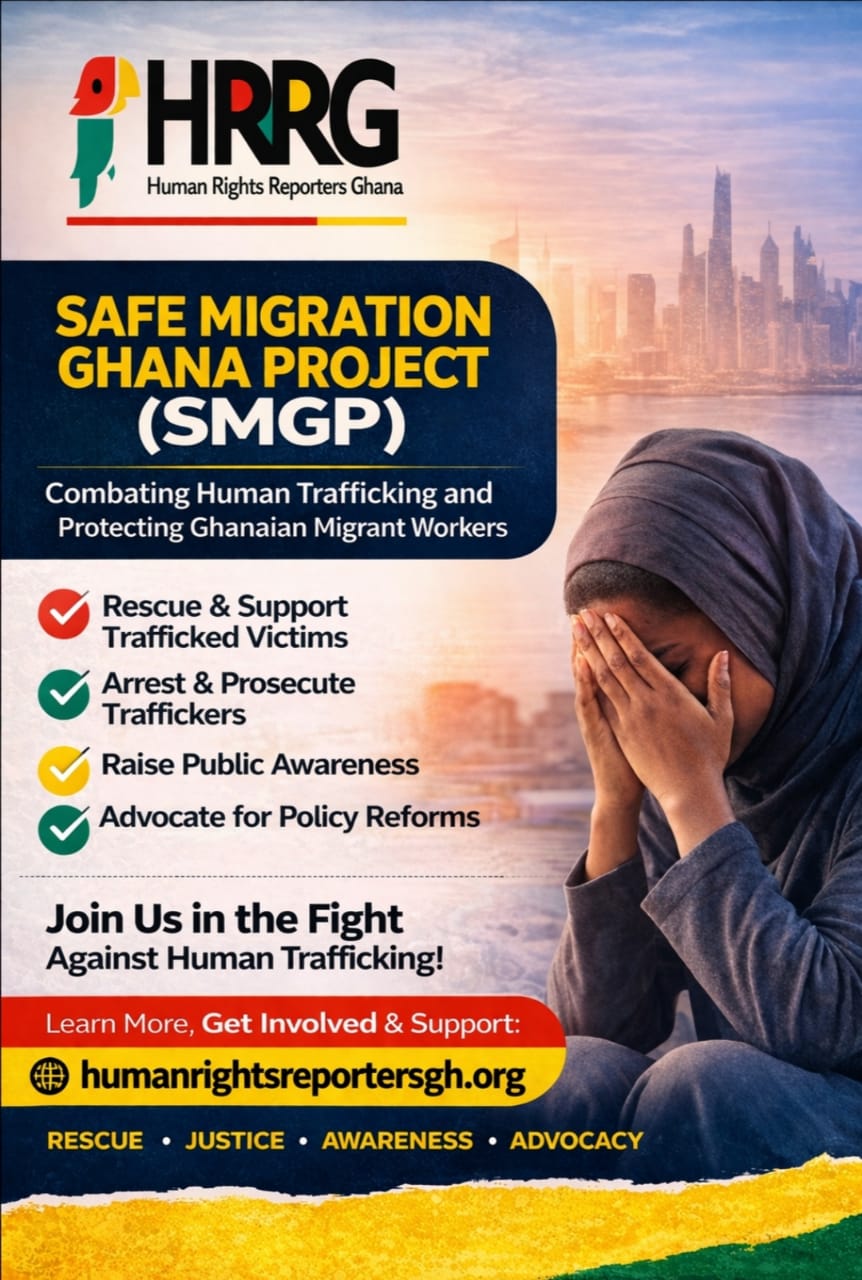
The Safe Migration Ghana Project (SMGP) is therefore designed to address these gaps through advocacy, intervention, and systemic reform.
2. Goal
To combat human trafficking and labour exploitation involving Ghanaian migrants and ensure protection, justice, and safe reintegration for victims.
3. Objectives
Rescue & Support: Facilitate identification, protection, and repatriation of trafficked Ghanaian migrants
Accountability: Advocate for investigation and prosecution of traffickers and complicit agents
Awareness: Educate the public on safe migration and risks of trafficking
Policy Influence: Strengthen legal and institutional frameworks for migrant protection
Partnerships: Build a strong coalition of CSOs, media, and international bodies
4. Key Components / Activities
1. Emergency Response & Case Management
Establish a 24/7 reporting and response mechanism
Provide legal, psychosocial, and referral support
Work with International Organization for Migration (IOM) on repatriation
Engage Ministry of Foreign Affairs and Regional Integration for consular intervention
🔹 2. Investigative Journalism & Documentation
Produce in-depth reports on trafficking networks
Document survivor stories (with consent)
Publish findings on HRRG platforms
🔹 3. Advocacy & Legal Action
Push for arrest and prosecution of traffickers
File formal complaints with:
Ghana Police Service
Economic and Organised Crime Office (EOCO)
Strategic litigation where possible
🔹 4. Public Awareness Campaign
Nationwide campaign: “Travel Safe, Work Safe”
Community outreach (especially high-risk regions)
Social media and media engagement
🔹 5. Policy & Stakeholder Engagement
Policy dialogues with government agencies
Advocate stricter regulation of recruitment agencies
Develop policy briefs and recommendations
🔹 6. Reintegration Support
Support returnees with:
Skills training
Livelihood support
Counselling services
5. Target Beneficiaries
Ghanaian migrant workers (especially women in domestic work)
Victims of trafficking and exploitation
At-risk youth seeking overseas employment
Families of migrant workers
6. Expected Outcomes
Increased number of victims safely repatriated
Improved accountability and prosecution of traffickers
Enhanced awareness on safe migration practices
Stronger institutional response to trafficking cases
Empowered survivors reintegrated into society
7. Implementation Strategy
Multi-stakeholder collaboration
Media-driven advocacy
Evidence-based interventions
Survivor-centered approach
8. Potential Partners
International Organization for Migration (IOM)
Ministry of Foreign Affairs and Regional Integration
Ghana Police Service
Ghana Immigration Service
Civil society organizations
Media houses
9. Sustainability Plan
Strategic partnerships and donor funding
Media visibility and advocacy
Capacity building for long-term impact
10. Call to Action
Human Rights Reporters Ghana calls on government institutions, development partners, civil society organizations, and the media to collaborate with us in combating human trafficking and protecting the rights and dignity of Ghanaian migrant workers.
🔥 Optional Tagline
“No Ghanaian Should Be Trapped Abroad.”