Joseph Wemakor honored for his efforts in promoting peace, security, education in Africa

Celebrated journalist and a staunch human rights activist, Joseph Wemakor has been conferred on the covetous Honorary Award for Peace, Security & Education of the Year at the Maiden Edition of the Africa Early Childhood Education (AECEA) 2021 which came off on Saturday November 13, 2021 at the plush CIBT auditorium near Adabraka in Accra on Saturday November 13, 2021.

The AECEA 2021 is an initiative of the Transformational Empowerment and Rural Integration Africa Foundation (TERIA), an NGO with support of hosts of partners  including the Ministry of Education, the Ghana Education Alliance and the Ministry of Gender Children and Social Protection among others  which seeks to recognize, reward and motivate outstanding preschool teachers, institutions including some notable personalities whose tenacity, hard work and commitment to work have significantly contributed to shaping the early childhood education sector in Ghana.

Joseph Wemakor who doubles as a peace ambassador, a national SDGs champion (Co-convener of Youth Platform and the SDG 3 of the Ghana CSOs Platform on SDGs), youth leader and a trained climate change proponent has been honored for his efforts which contributed immensely towards promotion of peace, security and education in Africa.

“This citation is in honour of Joseph Kobla Wemakor, Executive Director of Human Rights Reporters Ghana (HRRG) for your outstanding efforts which significantly contributed towards ensuring Peace and Security prevail among the Youth including the development of the Early Childhood Education Sector in Ghana.

It is with the utmost privilege that TERIA Foundation, organizers of the Africa Early Childhood Education Awards confers on you this honorary citation to motivate, inspire and urge you on to remain steadfast in your good deeds in order to become an agent of change and a beacon to many generations yet unborn, the citation complementing his honour reads”.

Mr Wemakor, in line with his passion as a human rights activist founded the Human Rights Reporters Ghana (HRRG), a non-governmental organization which is dedicated to protecting and ending human rights abuses in Ghana and beyond. HRRG brings together journalists, news editors, human rights activists, advocates, defenders and lawyers together to advance the rights of women, girls, children, young people with disabilities and other minority groups.

In 2019, he led the HRRG to launch a nationwide sensitization campaign on Kidnapping, Teenage Pregnancy and Tramadol Abuse (KTT Project) as a response to the increasing incidents of kidnappings in Ghana. 

The KTT campaign focused on addressing the issues of kidnapping, teenage pregnancy and drug abuse but equally set about creating a deeper education on human rights to bring about a cultural change.

Since the roll out of the program in July 2019, the campaign team has managed to reach over 60,000 beneficiaries particularly school children, parents and youth groups in the communities and religious settings within three regions of Ghana.

The positive feedback received from some beneficiaries a year after staging the campaign demonstrated the success of the initiative in saving lives and contributing significantly towards the advancement of the SDGs. 

The gesture has won many hearts and attracted commendations towards the HRRG and its amazing team of volunteers both in and outside the borders of Ghana.

 It equally paved the way for the HRRG to be nominated among ten (10) organizations across Africa who emerged as finalists for the 2020 Africans Rising Activism Award under the Movement of the Year category. Amazingly, the HRRG was the only activist group from Ghana to be chosen for this prestigious award.

Mr. Wemakor has been recognized on several platforms for his activism roles which endeared many hearts both at the local and the International level. In October 2020, he was featured in the ‘Business Woman Magazine’, a prestigious Ukrainian based glossy magazine which profiles influential men and women at the global level who have excelled in their various fields of endeavors including social issues, business, politics, governance, critical human rights issues and diplomacy.

As a celebrated journalist, he has picked up multiple journalism awards for his dexterity and captivating news reporting with much focus on critical issues which always catch the attention of policy makers. This include the enviable ‘Campus Clique Awards 2016’ of the Ghana Institute of Journalism (maiden edition), the Migration Media Awards 2018 (Winner) as well as the recipient of the “GIJ 60th Anniversary Media Contest” for producing outstanding print report which sheds light on the Sustainable Development Goals.

Joseph Wemakor is equally the National Focal Person of the taskforce for the African Network of Young Leaders for Peace and Sustainable (ANYL4PSD) in Ghana as well as the newly elected 2nd Deputy Director of Communication for the Bureau of African Peace (BAP), a regional non-profit organization committed to promotion of United Nations Peace Ideals.

The colorful ceremony which came under the theme: “Childcare & Security During & Post Covid-19 Era” also witnessed some excellent, hardworking, committed and deserving preschool teachers, institutions and notable personalities recognized for their immense contributions which brought about the desired change in the early childhood education sector across Africa.

Speaking at the event, Mad. Joyce Larnyoh, the Chair of the CSOs Platform on SDG 4 admonished the early childhood workers to be guided by the strategy of the 8 guidelines which underpin good interaction captured under emotional and comprehensive development of children in discharge of their duties at all times.

While congratulating the winners for their efforts, she equally appealed to the preschool teachers to always endeavour to prioritize the needs of kids and be able to deal with their emotional faculty while sticking to the regulative components always to avoid causing them any discomfort.

Some other winners under various categories include Emammuella Ntow, the Educator of the year (female category), Derrick Ofori the Educator of the year (male category), Esther Delali Gbodui (Assistant of the year), Romay Christian Montessori (Early childhood centre of the year), Dorcas Daisy Doku (school head of the year), Charles Sam Crabb (personality of the year and the Great Mission International (NGO of the year).

The event was graced by hosts of dignitaries including some crème de la crème of the society, government appointees, educationists, students, and the hierarchy of the Ghana Civil Society Organization platform on SDGs, leaders from the various Civil Society Organizations, NGOs, and representatives of partnering organizations including some members of the general public.

 Source: TERIA

Joseph Wemakor to speak at high-level summit on human rights

The Executive Director of Human Rights Reporters Ghana (HRRG), Joseph Wemakor has been listed among high-profile speakers who are poised to open fruitful discussions focused on human rights violations rearing ugly heads around the world with emphasis on cases in South Korea.

The event dubbed: ‘Summit on South Korea: Covid-19 and Human Rights Abuses’, slated for September 10 to 11, 2020 at 2pm each day will convene an audience and distinguished speakers made up of human rights activists,  advocates, lawyers and journalists from across the world via zoom.

A statement released by the event organizers on Tuesday indicated that human rights abuses have been on the rise in the Covid-19 world.

“The statistics show that in Ghana particularly, there are many recorded cases of domestic abuses in various homes and the situation is not different in other jurisdictions such as South Korea where the government is reportedly targeting minority groups in the name of fighting Covid-19,” the statement read.

“We all need to remind ourselves that human rights are not optional and we don’t get to choose which rights to respect and those we don’t have to respect,” AHRFI’s Campaign and Advocacy Director, Mr Kwame Batun said.

Some other acclaimed speakers which Mr. Wemakor will rub shoulders with vividly highlighted on the event banner include Ambassador Martin Ohumoibhi, a former President of the United Nations Human Rights Council (UNHRC), Richard Normanyo Esq, Private Legal Practitioner and Mr. Isaac Kwame Batun, Campaign and Advocacy Director at Accra Human Rights Forum International (AHRI).

The event, a brainchild of Accra Human Rights Forum International (AHRI) will be streamed live on the event organizer’s Facebook page.

South Korea Government should be focused on fighting coronavirus not Shincheonji church

It is indeed heartbreaking to know that in the middle of this unprecedented pandemic where all hands are on deck in attempt to possibly stem the flow of the virus and have it defeated absolutely, we have some ill-mannered persons and groups of people engaged in all kinds of abominable activities including stigmatization, discrimination, scapegoating, targeting and even persecuting others for the cause of an outbreak and spread of the disease which amounts to wanton violation of International human rights law. 

Since the pandemic broke in the city of Wuhan, Hubei, China in December 2019, we’ve heard about worrying reports chronicling varying degrees of atrocities being perpetrated by some superior groups against some minority groups in many parts of the world which has received wide condemnation from many people including activists, journalists, CSOs, NGOs, regional and international organizations globally.

Undeniably, there are indications of happenings in many parts of the world that human rights violations are under attack during this period of COVID-19 outbreak.

These signs highlighted a surge in the acts and displays of sinophobia as well as prejudice, xenophobia, discrimination, violence and racism against people.

From Asia to Europe, Africa to America including other continents, discrimination rages against people from these hotspots has been reported.

 In the midst of these developments there are also fear and misunderstanding stoking hatred worldwide which is hampering efforts in the fight against the pandemic.

As a journalist and a human rights defender, my greatest interest always lies in digging hard to know the hard-core facts of happenings around the world so I can continue to inform the citizenry as well as help amplify their voices, stand up for the vulnerable and the minority groups whose rights are being violated on daily basis, as duty demands.

As an avid reader too, I never joke at all with reading books, newspapers, magazines including online publications I lay my hands on particularly those ones which sheds light on human rights issues which has become an integral part of me at all times.

Recently, during one of my normal routines of scouting through the pages of a famous International online magazine, I chanced upon an article which sent shivers down my spine.

In fact what I saw was an ‘eyesore’ as I became completely puzzled just after reading the headline and few lines of the lead story.

At first, I found it difficult to believe the story but later, it dawned on me that the facts are correct after I’ve cross checked with some credible online news sources.

To my greatest surprise, I was thrown into shock and utter disbelief to find out that an 89-year-old South Korean and his church are in the hot waters for a crime which sounds stupid to me from all angles. What was the crime? 

According to media reports, the old frail man has been scapegoated for  alleged involvement in withholding information from the South Korean Government and authorities about church members which they claimed is harming the fighting against the pandemic.

Mr. Lee Man-hee, the founder and leader of Shincheonji Church, a minority religious group in South Korea, is the man in the centre of the whole controversy who is currently facing acute discrimination, and persecution in the wake of COVID-19.

The move which violates his human rights and dignity.  

He was subsequently arrested and detained at an unknown location to allow investigations to continue. What kind of investigation is that?

The BBC news portal reported it this way:  “Mr Lee was arrested early on Saturday, following an investigation. A judge said there were signs that evidence related to the case was being destroyed”, August 1”. 

What is even more worrying is that the old man in the centre of the hullabaloo was not the only one who found himself in this difficult situation.  

Shockingly, there are over 220,000 members of Shincheonji believers around the world who are equally being harassed by the South Korean Government. In addition, over 5,500 cases of human rights violations including coercive conversion have been reported since the outbreak of the novel coronavirus in South Korea. This was confirmed by media reports across the globe.

Also, a peace organization (not-for-profit) founded by Mr. Lee called the Heavenly Culture, World Peace, Restoration of Light (HWPL) has also come under threat of dissolution on same ‘funny’ grounds for contributing to the spread of the coronavirus. Currently, the organization is on the verge of having its legal entity withdrawn by the South Korean authorities, alleging that it is acting as a missionary group. So sad.

When nefarious attacks of this nature are turned into discrimination against the freedom of religion, it can only be described as a national and human shame for that matter.

These issues and more were vividly documented in a statement made to the United Nations Human Rights Council on June 18, 2020, A/HRC/44/NGO/23.

As a truth seeker, I tried to dig deeper into many archives which I could lay my hands on and finally managed to pick up evidence on the stark realities surrounding the happenings of outbreak of COVID-19, its spread and the unjust persecutions which are meted out to the innocent people living within the East Asia nation.

These mind-blowing revelations which I’ll be sharing with you here in a bit were equally corroborated by my sources in Seoul, the capital of South Korea. So have no doubt at all.

Well, it’s obvious, we live in a world where the truth is always hidden from us, not because it does not exist but simply because many people wouldn’t like to be told which our bane is.

This has been my observation growing up as a little kid in a small town called Keta located in the southern part of the Volta Region in Ghana, West Africa. In fact I call it a word of wisdom.

South Korea has been trending and dominating news headlines across the world for the wrong reason since the outbreak of the coronavirus pandemic hit the country in February 2020.

The whole saga of South Korean Government versus the Shincheonji Church began in February 2020, at Daegu Church of Shincheonji, where Mr. Lee also serves as the Chairman when one of the church members tested positive for COVID-19.  After the news broke, HWPL and Shincheonji have been under the threat of dissolution on the grounds that they have spread the epidemic and obstructed the efforts to contain the virus.

As a result, HWPL is on the verge of having its legal entity revoked for allegedly being a missionary organization in disguise, and on August 1, an arrest warrant for Chairman Lee was issued. The warrant from the court is not a guilty verdict, and efforts are being made to reveal the truth in the upcoming trials. I’ll be very delighted to convey this to you as soon as possible, hopefully in my next article as your humble servant of truth will always do.

Now let’s get the facts here once and now, In the middle of the whole saga lies the conservative fundamentalist brands of the Protestant Church in Korea, which have been wielding both political and social influence as the mainstream churches, classified Shincheonji as a cult to keep in check the rapid growth of Shincheonji.

While hiding behind the parents and siblings of Shincheonji believers, the fundamentalists masterminded the kidnapping and assaulting of Shincheonji members for coercive conversion. They even accumulated wealth from carrying out such illegal acts. Furthermore, they persistently opposed peace work by hampering HWPL whenever the NGO tried to book venues to hold peace events and shouting into megaphones to cause commotions on site. Rather than restoring and practicing love for humanity as they preach, they have no qualms about solidifying their power by colluding with certain political forces to their benefits.

The fundamentalists shift the blame for the outbreak and the spread of COVID-19 to Shincheonji, but their claims are false. Shincheonji has actively cooperated with the South Korean government and the authorities’ measures to combat COVID-19. Also, Shincheonji is a victim of the epidemic and had no intention to abet the virus spreading.

When the government requested personal information (names, addresses, contact numbers, and resident registration numbers) of all members home and abroad, totalling over 200,000, Chairman Lee simply expressed his concern as the leader of the church for submitting sensitive personal information without the individual’s consent. Mr. Lee did not order omitting names from the list. (Ultimately, the list was leaked to the public, causing members of Shincheonji residing in Korea to become an easy target of hate and discrimination in all aspects of life. Consequently, there are over 5,510 cases of human rights infringement as of August 2020. Among the victims were two members, who lost their lives due to persecution at home.

Indeed, the entire humiliating case at hand has attracted unwarranted attention and wide condemnation across the whole world from various International and Regional Organizations, Civil Society Organisations (CSOs) and Non-Governmental Organisations including the Human Rights Reporters Ghana (HRRG), a Ghanaian based NGO.

It pushed the US Commission on International Religious Freedom (USCIRF) who responded and expressed its concern for the breach of religious liberty in South Korea and recommended the government to condemn scapegoating and to respect religious freedom in responding to the outbreak.  

Furthermore, over 387 International leaders, religious and human rights NGOs put together have equally intensified calls to officially submit to the UN Human Rights Council a statement calling to stop scapegoating Shincheonji for the COVID-19 crisis.

In United Kingdom, Chairman of International Human Rights Committee, Iftikhar Ayaz said: “The brutal persecution of the members of the Shincheonji church in Korea and the inhumane denial of unregistering their corporation is a horrible negligence of State Responsibility which must treat all citizens equally without any discrimination whatsoever.

He added, “The South Korean Government must honor in practice the UN Universal Declaration of Human Rights which emphasizes the inherent dignity and the equal and inalienable rights of all members of the human family.”

Willy Fautre, Director of Human Rights Without Frontiers (HRWF), said that the recent attack on Shincheonji can be viewed as an attempt by the fundamentalist Protestant groups in South Korea to weaken and destroy the competitor in the religious market.

Also on August 10, 155 youth-led organizations with one million members from 62 countries around the world equally signed a joint letter addressed to the UN Secretary-General Antonio Guterres and the UN affiliates, including the UN Office for the Coordination of the Humanitarian Affairs (OCHA) and the Office of the UN High Commissioner for Human Rights (OHCHR) and requested that the discrimination against Shincheonji Church, its leader, Mr Lee Man-hee and his peace organization be halted.

In July 2020, eleven (11) NGOs including European Coordination of Associations and Individuals for Freedom of Conscience (CAP-LC) submitted a report for “annual report for the UN High Commissioner for Human Rights” to the UN Secretary General at the 44th session in the UN Assembly Human Rights Council. The report titled: “scapegoating members of Shincheonji for COVID-19 in the Republic of Korea.” This report equally condemned the unlawful acts in uncertain terms.

In support of calls for quick action, scholars in the field of religious studies and heads of human rights organizations have also published research and white papers based on findings of objective studies to make known what is true.

But despite all these calls for action, the South Korean Government is yet to react with any critical decision on the matter to back down on its nefarious activities against Mr Lee Man-hee and the over 220,000 members of Shincheonji Church who are being harassed indiscriminately and unduly.

What an embarrassment?  That a country which prides itself  with freedom of religion and where freedom of religion is enshrined in its constitution, its government can allow its constitution to be violated, whereas it clearly states in Article 20, Clauses 1 and 2 that, All citizens will enjoy freedom of religion” and “religion and state will be separated.”

This is highly barbaric and uncalled for and does not promote peace and religious freedom in any way at all.

The question is, what is religious freedom and why is it so pivotal?

According to the United States Commission on International Religious Freedom (USCIRF), religion is the right of people everywhere to heed the call of conscience in matters of religion and belief, living out its dictates openly, peacefully, and without fear.

The bedrock premise behind religious freedom is clear: no individual or entity has the right to force others to act against their conscience or prevent them from answering its call in a peaceful manner.

In line with these standards, Michelle Bachelet, the UN High Commissioner for Human Rights, expressed alarm at the clampdown on freedom of expression during COVID-19.

She particularly took notice of a disregard in upholding international principles of “legality, necessity, proportionality and precaution” over the service of a legitimate, “least intrusive” public health objective. The reality of these statements cannot be more evident in the case of Shincheonji Church.

According to USCIRF, Shincheonji is facing harassment from the South Korean government and society. Due to the unexpected group infection, Shincheonji Church may have been dealt with poorly. However, the lawsuits and excessive investigations currently conducted in the Shincheonji Church are clearly religious oppression.

Persecution during times of a pandemic is not new. Throughout history, minority religious groups have been blamed and scapegoated for the spread of pandemics. Jews were blamed during Black Death epidemics in Europe in the 14th century. In 1545, religious dissidents in Geneva were blamed for an outbreak of plague.  In India, over 3000 members of the Tablighi Jamaat subsequently spent more than 40 days in quarantine with government authorities refusing to discharge them. The Indian government levelled charges of culpable homicide at Tablighi Jamaat chief Muhammad Saad Kandhalvi when at least six of the group died of the infection after attending an event in March, before the countrywide lockdown.

However, Africa as a continent is not left out of the picture; got its fair share of the damning cake. With stigmatization, discrimination and violence dominating the picture in proportions thwarting efforts at winning the battle against the pandemic which particularly women being the hardest hit. In Cameroon, there have been reports of poor government response to the COVID-19 situation which give rise to stigmatization.

“People are scared of being tested. Quarantined persons bribe their way out of health centres they are kept in, imagine the consequences”, a Cameroonian woman was heard complaining bitterly.

Ghana, Nigeria, Ethiopia, Kenya, Egypt and Mali among other African countries have equally encountered similar problems which remains a major blow in the fight against the pandemic.

The question is, isn’t it prudent for the South Korean Government and authorities to concentrate its attention and be committed to the fight against the deadly pandemic rather than engaged in fight with a common church and its leader?

Similarly, it is much better for the good people of this world to unite against a pandemic which is wreaking so much havoc and claiming numerous lives globally rather than shifting attention on attacking each other which leaves much power in the hands of the virus to strike even more.

To ensure violation of freedom of religion cease and peace prevails in the East Asian country, I humbly called on the South Korean President, Minister of Justice, Minister of Foreign Affairs, and the United Nations to take action to protect minority religious groups and the principles of freedom of religion and to respect the UNHRC Statement, document A/HRC/44/NGO/23.  I also called for Mr. Lee to be freed while proper investigation is initiated to put the issue to rest.

I humbly appeal to the UN Secretary General, António Guterres to use his good office to ensure discrimination against Shincheonji Church, its leader, Mr Lee Man-hee and his peace organization cease.

I believe human rights dimensions must be taken into consideration if we are to successfully combat the coronavirus.

Let’s rise up and speak up against the culture of oppression and tyranny being perpetrated by the South Korean Government against the good people of Shincheonji church and its leader Mr Lee and his peace organization, the Heavenly Culture, World Peace, Restoration of Light (HWPL) because injustice anywhere is a threat to justice everywhere.

Let’s ensure that similar actions taking place in South Korea to promote peace be replicated in other parts of the world where these unlawful acts are rearing their ugly heads which violates the freedom and fundamental human rights of people and limits their dignity as humans.

The world deserves to be a better place for all of us to live in and not a war zone where we will be hunting down each one another over trivialities. We all have a responsibility to promote and ensure the protection of human rights at all times, even during this time of crisis

 It is our collective responsibility to make this happen. Let’s face it and be responsible citizens.

 Author: Joseph Kobla Wemakor

The writer is a human rights defender, Youth leader and Founder/ Executive Director of Human Rights Reporters Ghana (HRRG)

By: Joseph Kobla Wemakor

The writer is a human rights defender, Youth leader and Founder/ Executive Director of Human Rights Reporters Ghana (HRRG).

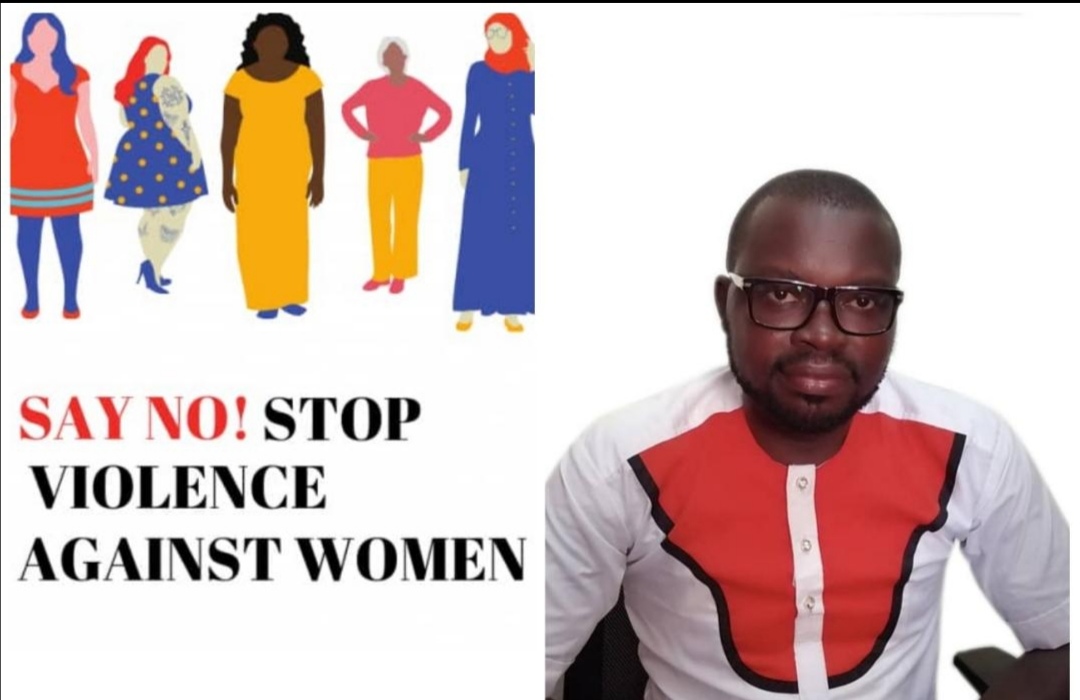
Halt discrimination and violence against women and we win coronavirus fight

A deadly pandemic hits at an alarming rate and brings untold pain and hardship upon the whole world.

All of a sudden, life came to a standstill as public health and economic issues escalated, dominating the long lists of crises the deadly pandemic has given birth to.

Since then, efforts are being made globally to contain the spread of the virus while help is sought for the affected.

As part of a pandemic response, the World Health Organization outlined measures to contain the virus which countries in the world are to comply with.

The World Bank Group and the International Monetary Fund (IMF) equally demonstrated their support to spur faster action on COVID-19 response in African countries by mobilizing their partners in the fight.

Massive support trickled down under various emergency packages to affected countries including funding, resources and policy advice was meant to help prevent, detect, and respond to the coronavirus pandemic which most African countries including our beloved country, Ghana was a beneficiary.

Though response was good globally, efforts towards achieving positive results in the fight dwindle as another canker which can be termed a ‘social evil’ emerges, fast wreaking havoc across the world.

The ‘social evil’ only known as ‘Stigma’ has a beloved partner called ‘Discrimination’ with a perilous offspring referred to as ‘Violence’. In my estimation, fighting it is even becoming scarier than the deadly coronavirus pandemic itself.

Arguably, like the Biblical cankerworm, it is gradually eating into the fabric of the society at an alarming rate which keeps tongues wagging; not only that, it has ruffled feathers too and raised eyebrows leaving many people completely worried. 

Stigmatization is actually an old enemy of the world but unfortunately well awake now exacerbating the fight against COVID-19 which has provoked a series of discriminatory acts across continents, with different groups as targets.

In the era of the ‘new normal’ which we currently find ourselves, it is interesting to know that this old enemy is now being accepted too as the ‘new normal enemy’ as its attacks are being intensified across the world which remains a phenomenon yet to unravel.

Despite the scarcity of data on this phenomenon, the discriminatory incidents reported in newspaper articles and on social media seem to confirm that this is a global phenomenon. 

All these incidents seem to confirm that, in times of crisis and great uncertainty, especially of such magnitude as the one we are currently experiencing, people tend to look for scapegoats in order to vent their frustrations, worries and fears. 

Stigma is discrimination against an identifiable group of people, place, or a nation. It is associated with a lack of knowledge about how COVID-19 spreads, a need to blame someone, fears about disease and death, and gossip that spreads rumours and myths. Stigma can lead to labeling, stereotyping, discrimination of external icon, and other negative behaviour towards others. For example, stigma and discrimination can occur when people link a disease, such as COVID-19, with a population, community, or nationality.

This supposed ‘new normal enemy’ called stigma hurts everyone by creating more fear or anger toward ordinary people instead of focusing on the disease that is causing the problem.

In the era of the novel coronavirus pandemic, we have witnessed this enemy unleashed its excruciating attacks in high proportions across the world, making more people to hide their symptoms or disease, keeping them from seeking healthcare immediately, and preventing individuals from adopting healthy behaviours. An indication that stigma makes it more difficult to control the spread of the pandemic which is a major concern. 

The UN Secretary General, António Guterres in a policy brief on COVID-19 and Human Rights said “the instability and fear that the pandemic engenders is exacerbating existing human rights concerns, such as discrimination against certain groups”,

Also Ms E. Tendayi Achiume and Mr Fernand de Varennes, who are both UN Special Rapporteurs on contemporary forms of racism and on minority issues, also reported on COVID-19-related attacks against minority groups worldwide.

The pandemic indeed reinforced the targeting of the “other”. While the profile of victims varies from country to country, there seems to be a common pattern in discriminatory acts occurring during the pandemic: more often than not the target is generally the ‘other’, i.e. the foreigner, someone belonging to an ethnic or cultural minority, etc. 

Since the emergence of COVID-19, we have witnessed stigmatization among specific populations, and the rise of harmful stereotypes.

According to a report by ten (10) UNESCO Chairs dealing with human rights and social inclusion, the advent of the first phase of the COVID-19 contagion, those who suffered the most from discrimination were Asians and people of Asian descent, who were frequently targeted for causing the pandemic and its spread. 

As reported by UNESCO Chairs from Italy, Spain, Greece, Denmark and the Netherlands, discriminatory episodes consisted of verbal assaults in public places, denigrating campaigns on social media, the boycott of their business activities and, in some cases, difficulties in access to educational institutions. 

In South Korea, 89-year-old Lee Man-Hee, who is the Founder of Shincheonji church and some of his leaders are being persecuted; the church, his peaceful NGO (HWPL) have been under threat of dissolution on the grounds that they have contributed to the spread of the pandemic and obstructed efforts to contain the virus since the news of one of his church members who tested to COVID-19 broke in February 2020. 

He was subsequently arrested on Saturday August 1, 2020 by the Korean authorities on the pretext that the move is to allow investigation be conducted into the matter without his interference.

In addition, over 5,500 cases of human rights violations including coercive conversion have been reported since the outbreak of the novel coronavirus in South Korea, many of which are women.

This sad happening in the Asian country is just a typical example of many unfortunate developments rearing ugly heads across the world which has received wide condemnation from the Human Rights Reporters Ghana (HRRG), a Ghanaian based NGO including International and Regional Organizations, Civil Society Organisations (CSOs) and Non-Governmental Organisations across the globe.

Also joining the protestors on August 10, are 155 youth-led organizations with one million members from 62 countries around the world who in a joint letter to addressed to the UN Secretary-General Antonio Guterres and the UN affiliates, including the UN Office for the Coordination of the Humanitarian Affairs (OCHA) and the Office of the UN High Commissioner for Human Rights (OHCHR) requested that the discrimination against Shincheonji Church, its leader, Mr Lee Man-hee and a UN ECOSOC-affiliated organization named Heavenly Culture, World Peace, Restoration of Light (HWPL), he owns be halted. But sad enough, the whole world is yet to see any response from the South Korean Government in regards to the matter. The question is, for how long will it take the authorities to respond?

The truth remains, in the midst of all these attacks, women and girls in Africa are among the most vulnerable groups exposed to the negative impacts of the coronavirus pandemic.

For example in Ghana, the barrier to socialization was broken due to stigmatization which became a nightmare during a three weeks partial lockdown imposed by the government to contain the virus. Within the period, a lot of atrocities were perpetrated against many Ghanaians with women and girls at the harsh receiving end.

During the period, the risk of intimate partner violence, sexual harassment, and abuse of women and girls became a distressing challenge. 

Arguably, this is not just a typical Ghanaian case but a global phenomenon which hit Africa to the core owing to the countless of problems the continent is bedeviled of which large population size, poverty, hunger, disease and violence among others can be blamed exacerbated by the compounding economic and the health crisis induced by the impact of the pandemic. 

On business grounds, women in Africa are overrepresented at the front lines of the response to the pandemic; women, as direct caregivers, are more directly exposed to the virus. 

Over 60 percent of Africa’s health workforce and essential social service providers are female, even as high as 91 percent in Egypt. Second, back at home, women shoulder far more care work than men—up to 11 times more in places like Mali.

Additional care needs from school closures as a result of the lockdowns and elderly relatives who need to be specially taken care of mean that women have to provide even more care services at home while still working, mainly because of entrenched traditional norms on gender roles in many African countries. The extra care work at home from the lockdowns is estimated at around 4 hours per day. African women in the labour force are more vulnerable to income and job loss. Compounding these difficulties, women are at a higher risk of job and income losses during the pandemic. 

The coronavirus pandemic primarily affects the types of jobs often done by women in service sectors such as air travel, hospitality, tourism, food and beverage, and retail services in general.

The impact of border closures and lockdowns on industries along the supply chain are further exposing women to income losses, especially in countries integrated into global value chains, such as light manufacturing in Ethiopia where more than 50 percent of textile workers are women who are also reputed to the lowest-paid garment factory workers around the world. Furthermore, women’s generally weaker positions in the labour market for example, with lower earnings and less seniority than men as well as higher informality in their work (89 percent of women in Africa are employed informally) with no employment security and benefits leaves them more vulnerable and easier to lay off by employers than men in the wake of COVID-19.

Judging from the above indicators, it is obvious to know that the impact of COVID-19 on women as far as business and social life is concerned are indeed worrying and calls for action to save our women from unnecessary pressures which violate their freedom and fundamental human rights.

Yes, the pandemic may have brought us untold woes which we ought to collaborate and deal with but certainly cannot be blamed for the atrocities and violence’s being perpetrated against each other which takes greater toll on our women and their businesses which put them at risk. 

What we should have been doing is concentrating all our efforts and attention on fighting the virus instead of fighting each other through stigmatization, discrimination and violence means.

For women working as first responders and in other essential services, governments should promote and accommodate flexible working arrangements that account for workers’ family responsibilities. Because women more often work in economic sectors that are hardest hit, they require specific financial assistance to maintain their living standards through one-off income support in cash and/or in-kind such as suspension of rent and utility payments. These policies would help affected women and girls stay afloat in their homes (avoiding evictions) and continue to support their families.

Our women deserve better rather than being treated as slaves which is unlawful and goes against their rights. Safeguarding our women’s lives against stigmatization, discrimination and violence attacks should be a collective responsibility which we must be committed to at all times especially in the era of COVID-19.

Let’s us all rise up in unison and condemn stigmatization, discrimination and violence against women, while COVID-19 fight evolves.

Efforts at making gains in achieving the SDGs in these trying moments should not be lost on us as it offers a real opportunity to drive lasting change for women’s right equality, and to bring transformative change in women’s and men’s lives. 

While at it, I call on African governments to take bold steps to mainstream gender in their responses to the crisis. 

Policymakers should devise innovative ways of receiving reports of violence during the pandemic such as special dedicated hotlines, apps, and use of coded messages to thwart efforts of abusers who often monitor or restrict access of victims to the outside world.

I believe wining the fight against the deadly coronavirus pandemic can be much easier only by first defeating our worst enemy, the ‘social evil,’ by unmasking stigmatization, its lovely partner; discrimination and prevent it from giving birth to its offspring called violence by ensuring we report regularly and also take the appropriate action on cases of violence being perpetrated particularly against our women.

This should be made as easy as possible. 

By Joseph Kobla Wemakor

The writer is a staunch human rights defender, Gender advocate and Founder/ Executive Director of Human Rights Reporters Ghana (HRRG).

Joseph Wemakor elected PRO of Greater Accra Regional Youth Network

The Executive Director of Human Rights Reporters Ghana (HRRG), Joseph Kobla Wemakor has been elected to serve the office of the Greater Accra Regional Youth Network (GARYN) as a Public Relations Officer (PRO).

Mr Wemakor, a multiple award-winning Journalist who also doubles as the Deputy Head of Media and Communication of PLO Lumumba Foundation, Ghana beat his closest contender Richard Kasu to be sworn-in as the new Public Relations Officer (PRO) for the Greater Accra Regional Youth Network.

The election of the Executive Officers as part of the launch of the Greater Accra Regional Youth Network (GARYN), events held in Accra on Friday, December 20, 2019.

Mr Wemakor in an interview with the Ghana News Agency expressed his gratitude to the delegates for the honour done him.

He pledged to bring his expertise on board to propel the agenda of the Network to a higher height.

The event dubbed: “360 Face To Face Regional Assembly Meeting 2019” was the first-ever General Assembly Meeting of the Network, which also witnessed the capacity building of the youth and the launch of Sustainable Development Goals (SDGs) interventions, a pilot activity the youth would be rolling out as a way of contributing their quota the achievement of the SDGs.

3

General NewsMon, 23 Dec 2019

Joseph Wemakor elected PRO of Greater Accra Regional Youth Network

Joseph Wemakor

Listen to the Article

The Executive Director of Human Rights Reporters Ghana (HRRG), Joseph Kobla Wemakor has been elected to serve the office of the Greater Accra Regional Youth Network (GARYN) as a Public Relations Officer (PRO).

Mr Wemakor, a multiple award-winning Journalist who also doubles as the Deputy Head of Media and Communication of PLO Lumumba Foundation, Ghana beat his closest contender Richard Kasu to be sworn-in as the new Public Relations Officer (PRO) for the Greater Accra Regional Youth Network.

The election of the Executive Officers as part of the launch of the Greater Accra Regional Youth Network (GARYN), events held in Accra on Friday, December 20, 2019.

Mr Wemakor in an interview with the Ghana News Agency expressed his gratitude to the delegates for the honour done him.

He pledged to bring his expertise on board to propel the agenda of the Network to a higher height.

The event dubbed: “360 Face To Face Regional Assembly Meeting 2019” was the first-ever General Assembly Meeting of the Network, which also witnessed the capacity building of the youth and the launch of Sustainable Development Goals (SDGs) interventions, a pilot activity the youth would be rolling out as a way of contributing their quota the achievement of the SDGs.

The elected Executives Officers of GARYN were subsequently sworn into office to steer the affairs of Network with immediate effect.

The one-day meeting on the theme; “Youth in Action: Developing Greater and beyond” was attended by over 200 representatives of several youth groups within the Greater Accra Region (delegates) including; some leaders of various National Youth Networks in the country as well as graced by some dignitaries.

Speaking at the meeting, the Greater Accra Regional Executive Secretary of Peace Council, Mr Emmanuel Anim charged the youth to channel their energies to the “who courts” and ensure that if they do not understand something, they ask questions for clarity and resort to dialogue to avert conflict and maintain peace and order at all times.

“My Chairman will always say let’s ‘jaw, jaw’ than ‘war, war’ because it is going to be tough that we are able to dispel misconceptions, miseducation and misinformation, but if we don’t dialogue, these things will fester and it will lead to conflict”.

He further stressed, “Let us engage intellectually, let us engage discourse and I believe as we do that, we can build not only a developed country but a developed youth”.

He called on the newly elected Executives to endeavour effective mobilisation of the youth and ensure they are properly engaged and managed using discourse as a tool to ensure peace prevail at all times to engender development.

The Greater Accra Regional Youth Network is a Network of Youth groups from all districts, Municipal and Metropolitan Assemblies in the Greater Accra Region.

Its core mandate is to promote holistic youth development in the region through advocacy and embarking on service delivery projects that will directly impact the lives of young people in the Greater Accra Region.

Other newly elected executives of GARYN were; Gyimah Adjakwa (President), Florence Agyemang Mensah (Vice President), Lydia Adzag-Bil (General Secretary), Maimunatu Yussif (Women Commissioner) and Trust Klutsey (Organizer).

Source: ghananewsagency.org