From being recognised in 2016 to creating a platform for recognising others in 2026: The journey of Dr. Wemakor
Ten years can change the direction of a career.
But for Dr. Joseph Kobla Wemakor, the decade between 2016 and 2026 has been a journey from being recognised as a young student media professional to creating a platform dedicated to recognising others whose work is making a difference in human rights, democracy, peace, justice, and social development.
In 2016, while still building his identity as a young media professional and human rights advocate, Wemakor received an award that would become one of the early milestones in a journey that has since taken him far beyond the confines of a university campus.
Ten years later, in 2026, he is no longer only receiving recognition for his own work. He has created a platform dedicated to recognising individuals and institutions making outstanding contributions to human rights, democracy, peace, justice and social development across Africa and beyond.
That journey—from receiving recognition to creating a platform to recognise others—is the story behind the evolution of Dr. Joseph Kobla Wemakor and the Global RightsShield Awards.
The journey began in 2016
On April 1, 2016, at the maiden edition of the Campus Clique Awards held at the Ghana Institute of Journalism (GIJ), now the University of Media, Arts and Communication (UniMAC), Joseph Kobla Wemakor was adjudged the Most Influential Student Media Personnel.
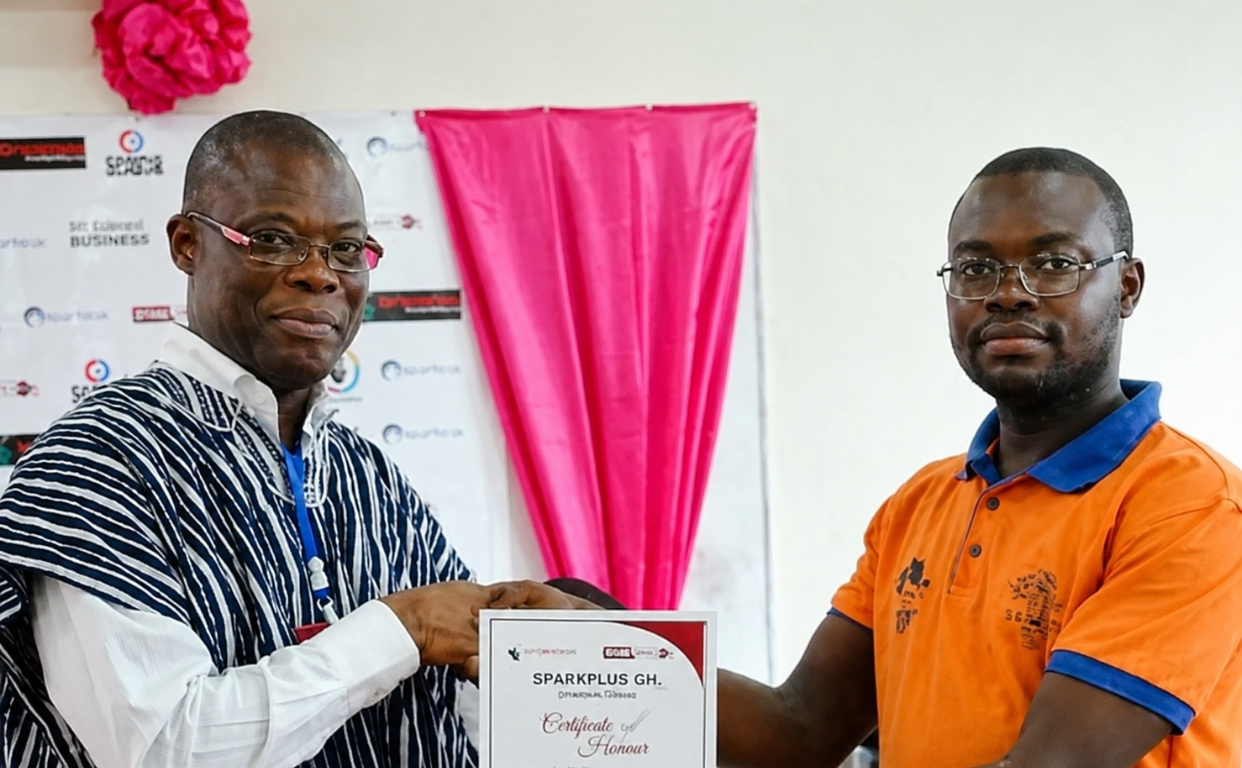
The award was presented by Hon. Fiifi Fiavi Kwetey, who was then Ghana’s Minister of Transport.
For a young student pursuing journalism, the recognition was significant.
But rather than becoming an endpoint, it served as an early affirmation that the combination of media, advocacy and public-interest communication could become a powerful vehicle for social change.
It was the beginning of a journey in which journalism would increasingly intersect with human rights advocacy, development communication, and civic engagement.
From campus recognition to national media excellence
Two years later, in 2018, Wemakor won the National Media Competition on Migration Reporting, organised by Media Response with support from partners including FMM West Africa, the International Organization for Migration (IOM), the European Union, and Ghana’s Ministry of Information.
The recognition reflected his growing commitment to using journalism to draw public attention to important social and development issues.
In 2019, he again distinguished himself through the GIJ 60th Anniversary Media Contest, which focused on the theme “The Role of Media in Promoting Effective Citizen Participation for Achieving Sustainable Development Goals.”
Wemakor emerged as a winner after producing an outstanding print report focused on the United Nations Sustainable Development Goals (SDGs).
The award was presented by Professor Kwamena Kwansah-Aidoo, then Rector of the Ghana Institute of Journalism, during the institution’s Anniversary Grand Durbar on October 16, 2019.
By this point, a pattern was becoming clear: the recognition was not simply about journalism as a profession. It was increasingly about using communication as an instrument for citizenship, human rights and sustainable development.
Taking the human rights message beyond Ghana
Wemakor’s advocacy and communication work also began receiving international attention.
In October 2020, he was featured in the International Business Woman Magazine, based in Ukraine, in connection with efforts to uphold women’s rights in the aftermath of the COVID-19 lockdown.
In 2021, he received the Honorary Award for Peace, Security & Education of the Year at the maiden edition of the Africa Early Childhood Awards (AECEA).
The recognition further broadened the scope of his public-interest work, linking human rights advocacy with peace, education, and the protection of vulnerable groups.
2023: A defining year of international recognition
The year 2023 became one of the most significant periods in Wemakor’s journey.
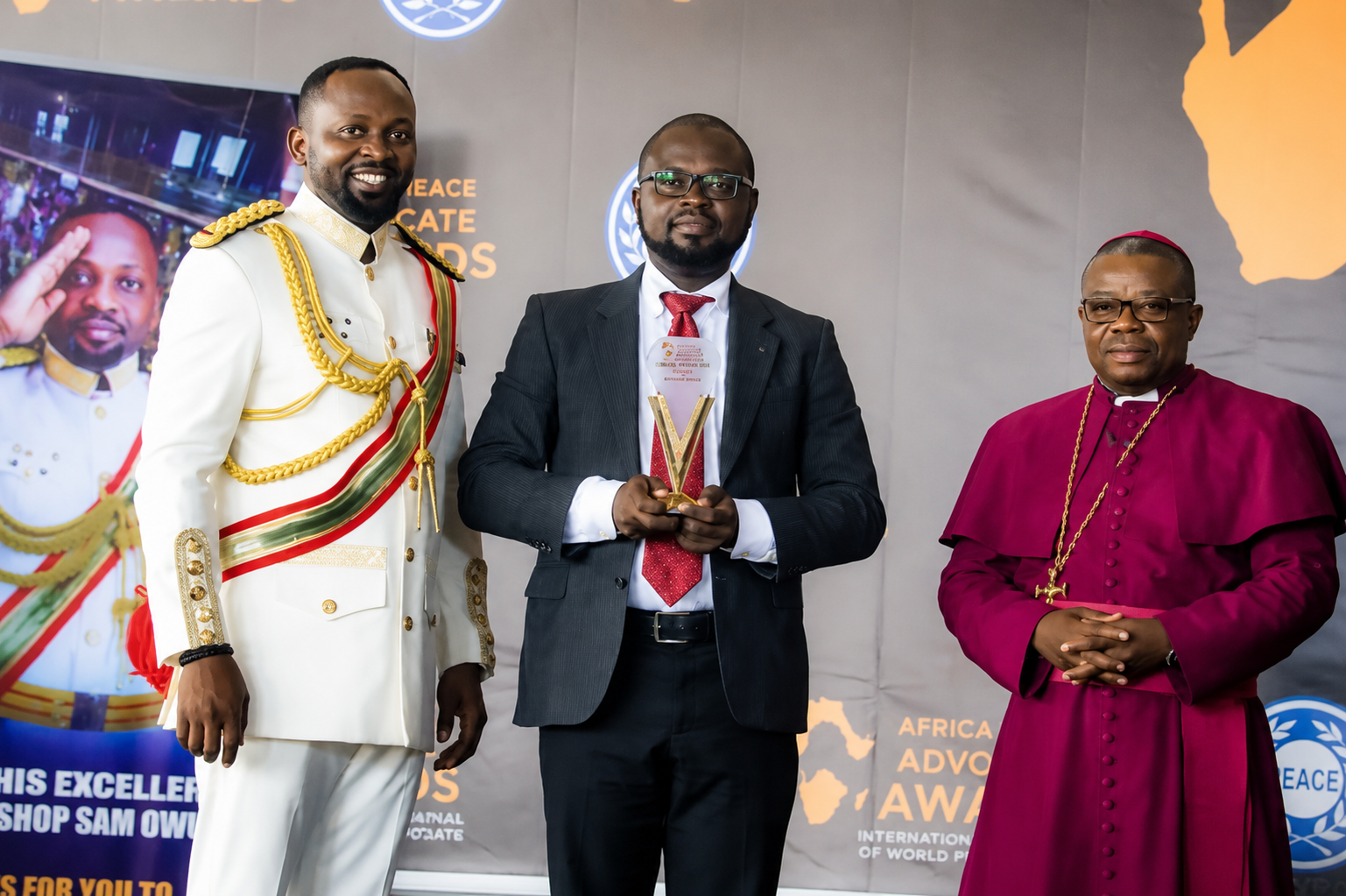
He was honoured with the Africa Peace Advocate Award 2023, presented by the International Association of World Peace Advocates (IAWPA).
He was also selected as a finalist for the 4th Edition of the African Human Rights Defenders Shield Awards, presented by AfricanDefenders, the Pan-African Human Rights Defenders Network based in Kampala, Uganda.
But perhaps the most significant recognition of the year came through the 5th UN Global Entreps Award.
Wemakor, through the nationwide KTT Project—Kidnapping, Teenage Pregnancy and Tramadol/Drug Abuse Sensitization Campaign—received the award for Best International Practice on Sustainability.
The project had reached more than 60,000 people, demonstrating how grassroots advocacy and public education could generate significant social impact.
The award was conferred in Costa Rica by Entreps—International Board of Global Actors and Business for Sustainability, in partnership with the United Nations framework associated with the initiative.
According to the award documentation, the global contest assessed 1,912 projects and initiatives from 126 countries and regions over a two-year period before selecting initiatives demonstrating strong implementation of the Sustainable Development Goals.
The recognition therefore placed the work of Wemakor and Human Rights Reporters Ghana (HRRG) within a much broader international development context.
The KTT Project became more than a campaign. It became evidence of what sustained community-based advocacy, strategic communication, and public education could accomplish.
2024: Recognition expands beyond advocacy
The momentum continued into 2024.
Wemakor was recognised with the Global Humanitarian and Ministerial Excellence Award for his contributions to human rights advocacy and social impact.
That same year, he received an Honorary Doctorate in Executive Leadership in Humanity from the International Kingdom University in Margate, Florida, USA, in recognition of his achievements and contribution to humanity.
He was also named among Ghana’s 100 Most Impactful Changemakers in 2024, placing him among individuals recognised for making meaningful contributions to social change and national development.
Another important recognition came from the World Bank, where Wemakor was acknowledged for his expert contribution to the Second Edition of the Equality of Opportunity for Sexual and Gender Minorities (EQOSOGI) Report.
Taken together, these recognitions reflected an expanding body of work spanning human rights, media, gender justice, civic participation, peace, sustainable development and community advocacy.
But recognition was never supposed to be the destination
For Wemakor, however, the significance of these honours goes beyond plaques, certificates, titles and ceremonies.
They represent something deeper.
They demonstrate what can happen when an individual chooses to dedicate his or her professional life to public service and social impact.
And this is where the story takes a new turn.
After spending years being recognised for his own contributions, Wemakor arrived at a different question:
What if recognition could become a vehicle for inspiring and amplifying the work of others?
That question helped give birth to the Global RightsShield Awards.
From award recipient to award platform founder
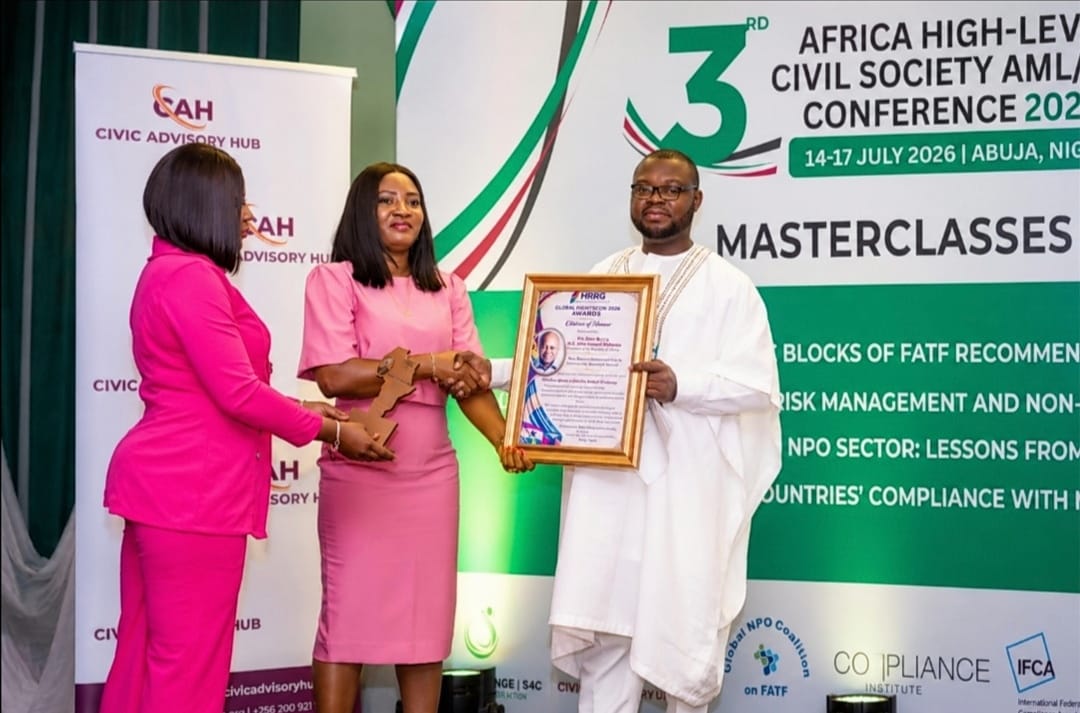
In 2026, Wemakor took a significant step from being a recipient of recognition to becoming a convener of recognition.
As the Founder and Convener of the Global RightsShield Awards, he is building a platform designed to celebrate individuals, institutions, civil society organisations, human rights defenders, journalists, advocates, public officials, and other actors whose work contributes meaningfully to human rights, democracy, justice, peace, and social progress.
The transformation is significant.
The young student media professional who once stood on a university stage to receive an award is now creating a platform that seeks to put others on that same stage.
The person who once had his own work assessed by award committees has now accepted the responsibility of creating a credible platform through which the contributions of others can be identified, documented and celebrated.
It is a transition from recipient to convener, from being recognised to recognising, and from personal achievement to institutional legacy.
A decade of recognition, a lifetime of service
Looking back from 2026, the journey from the 2016 Campus Clique Awards to the creation of the Global RightsShield Awards is not simply a collection of honours.
It is a timeline of growth.
From student journalism to national media competitions.
From migration reporting to sustainable development advocacy.
From community sensitisation to international recognition.
From peace advocacy to human rights defence.
From working to create impact to creating a platform that celebrates those who create impact.
At the heart of it all has been a conviction that media and advocacy can be powerful instruments for changing lives and strengthening society.
Through Human Rights Reporters Ghana, Wemakor has continued to pursue that conviction, working across areas including human rights, child protection, women’s rights, gender justice, environmental and land rights, climate justice, migration and sustainable livelihoods.
The Global RightsShield Awards therefore represents a natural extension of that philosophy.
It is not simply about giving awards.
It is about telling stories.
It is about documenting impact.
It is about shining a light on people and institutions whose contributions may otherwise remain unnoticed.
It is about creating inspiration for the next generation of changemakers.
Recognition should create responsibility
There is an important lesson in Wemakor’s journey.
Recognition can be powerful, but recognition should not become the destination.
An award can validate past work, but its greatest value may lie in what it inspires someone to do next.
For Wemakor, the recognition he received over the past decade appears to have strengthened rather than diminished his sense of responsibility.
Every award became another reminder that public service matters.
Every honour became an encouragement to do more.
Every platform became an opportunity to amplify issues affecting people and communities.
And eventually, the accumulated experience led to a new responsibility: creating opportunities for others to be seen, heard and celebrated.
From 2016 to 2026—and beyond
The journey that began with a student media award in 2016 has now entered a new chapter.
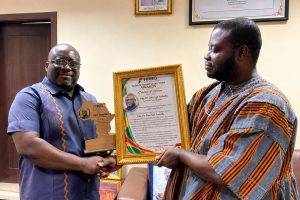
In 2016, Joseph Kobla Wemakor was standing on a university campus receiving recognition for his influence as a student media professional.
In 2026, he is helping build a global recognition platform through which the achievements of others can be brought into the spotlight.
That is the evolution.
From being recognised to recognising others.
From receiving a platform to creating a platform.
From personal achievement to collective impact.
And perhaps the most important lesson from the journey is that the greatest measure of success is not how many awards one receives, but what one does with the credibility, experience, and opportunities those awards create.
For Dr. Joseph Kobla Wemakor, the next chapter is therefore not simply about adding another award to his collection.
It is about building something that can outlive the individual.
A platform where human rights defenders can be celebrated.
Where advocates can be amplified.
Where institutions making a difference can be acknowledged.
Where courage can be recognised.
Where social impact can be documented.
And where the next generation of changemakers can look at those who came before them and be inspired to serve humanity.
Ten years after receiving his first major recognition as a young student media professional, the journey has come full circle.
He was once recognised for his work.
Today, he is building a platform to recognise the work of others.
And tomorrow, the true measure of that journey may be found not in the awards bearing his name, but in the lives, causes, and changemakers that the platform he created helped bring to the world’s attention.
Dr. Joseph Kobla Wemakor is the Founder and Executive Director of Human Rights Reporters Ghana (HRRG) and Founder/Convener of the Global RightsShield Awards.